Mold Removal in Tuscany Village, NV
Tuscany Village is the guard-gated golf community on Olivia Parkway in east Henderson, on ground Jim Rhodes first proposed as Palm City in 1995. The golf course opened in 2003 after a year of litigation delays, homes started in 2005, and by 2009 about 700 of a planned 2,000 had been built before the recession stalled it; Century Communities finished hundreds of the remaining lots after 2015.
That gives Tuscany two eras of house on the same street: 2005 to 2008 builds with the era's plumbing and a first water heater now past its life, and 2015-and-later builds with tighter envelopes. Both are stucco on slabs under tile with the air handler in the attic, and both back onto a golf course whose irrigation runs every night.
Homeowners in Tuscany Village reach an independent local mold provider through this site's phone line. That provider meters the house and tells you what it needs. We only set up the call.
Tuscany Village mold removal in a 2006 build and a 2017 build
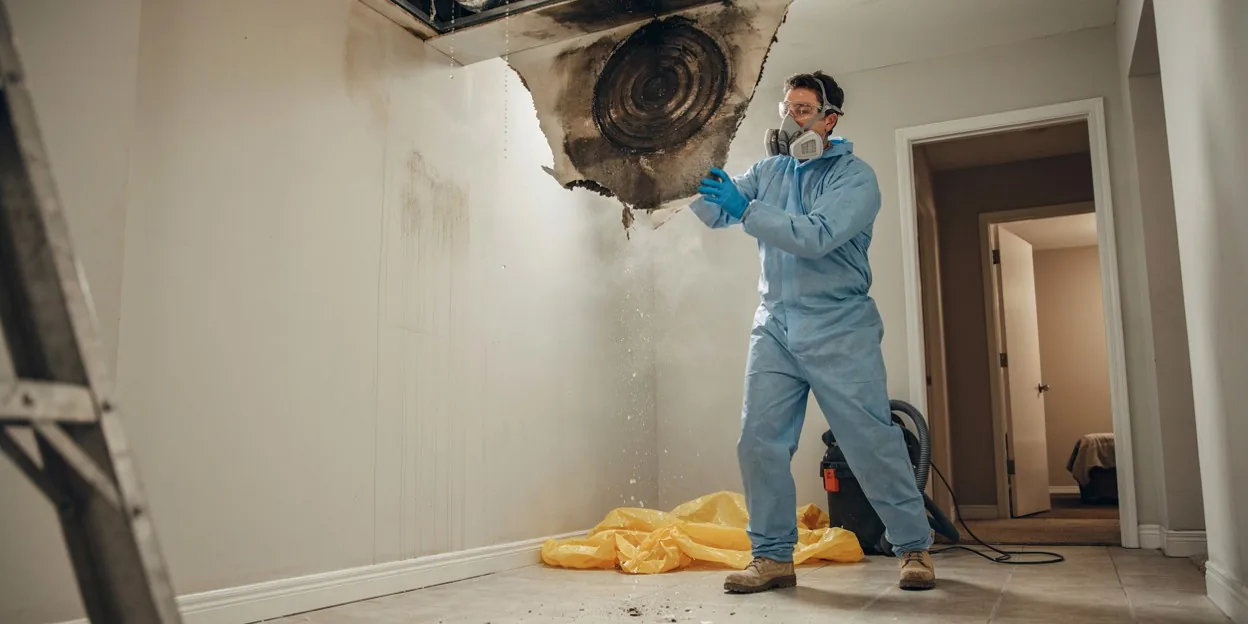
A water heater that wet the garage wall in a 2006 house is mold removal. A ceiling stain under an attic air handler whose pan overflowed is HVAC mold cleaning plus the drywall below. A second home that came back musty in September is whole-home mold remediation.
The course the neighborhood was built around
Chimera Golf Club, the Ted Robinson course that opened as Tuscany's centerpiece and took its current name in 2015, runs through the middle of the community, and the houses on its edge have irrigation overspray against their back stucco most nights of the year.
Call (702) 602-8512 and tell us what you see. We put you through to a local mold provider serving Tuscany Village.
Services Available in Tuscany Village
Mold Removal
Growth on drywall behind a water heater, a fridge line, or a slab leak: room sealed, wet board cut to the meter line, framing HEPA-cleaned and dried.
Black Mold Removal
A dark patch handled by how far the water traveled, not its color: containment, porous material out, hard surfaces cleaned, leak fixed before closing.
Whole-Home Mold Remediation
A slab leak or a supply line that ran for weeks while the house sat empty, mapped room by room and cleared in zones as one project.
HVAC Mold Cleaning
Coil, drain pan, and condensate line cleaned or replaced when the air handler in the garage or attic sweats through a 110-degree summer.
Bathroom Mold Removal
Growth behind a vanity, under a shower pan, or on a ceiling with no fan, removed with the supply line or drain leak fixed first.
Attic Mold Remediation
Growth on roof sheathing under slipped tile or around a sweating duct, cleaned and treated once the underlayment or the insulation is fixed.
Mold Odor Removal
A musty smell in a house that looks fine, traced to the wet material under the laminate or behind the cabinet, then removed and treated.
Mold Damage Repair
Drywall, texture, baseboard, and cabinet bottoms put back after removal, once the slab reads dry and the leak that started it is repaired.