Mold Removal in Water Street District, NV
The Water Street District is the original Henderson, the townsite laid out in 1941 around the water main that gave the street its name. The houses on the streets off Water Street are the 1940s and 1950s cottages built for the Basic Magnesium workers, plus 1960s and 1970s ranches on the blocks behind them, most without an HOA and many with a rooftop evaporative cooler still in use.
These are the houses in Henderson most likely to have galvanized supply lines, a swamp cooler curb that has been patched for forty years, plaster instead of drywall in the oldest ones, and additions built without permits. The city's redevelopment agency, formed in 1995, has rebuilt the commercial street; the houses behind it are the owners' job.
Homeowners in the Water Street District reach an independent local mold provider through this site's phone line. That provider meters the house and tells you what it needs. We only set up the call.
Water Street District mold removal in a townsite cottage
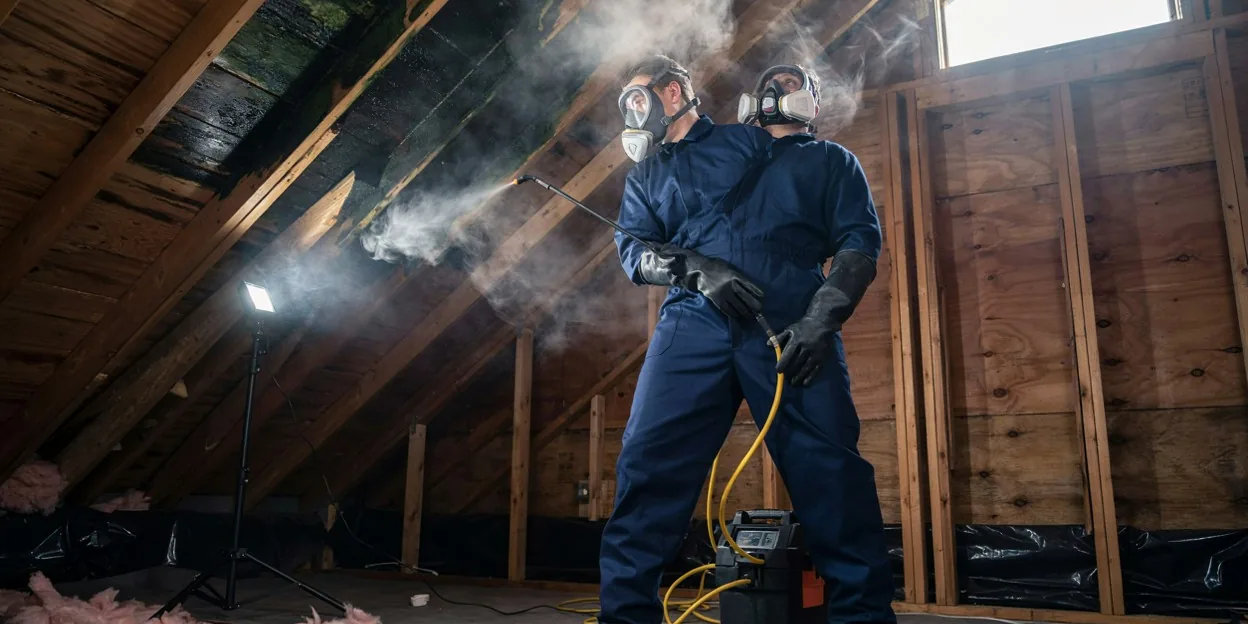
A galvanized line that pinholed inside a plaster wall is mold removal, worked around lath. A swamp cooler that dripped down the duct chase all summer is attic mold remediation, and the cooler's pan and curb get looked at while the crew is up there. A bathroom added in the 1970s with no fan is bathroom mold removal.
Reading the street's history before you open a wall
The city's Water Street walking tour tells the townsite story block by block, and it is worth reading before a crew opens a 1943 wall, because what is inside it is not what is inside a Green Valley wall.
Call (702) 602-8512 and tell us what you see. We put you through to a local mold provider serving the Water Street District.
Services Available in Water Street District
Mold Removal
Growth on drywall behind a water heater, a fridge line, or a slab leak: room sealed, wet board cut to the meter line, framing HEPA-cleaned and dried.
Black Mold Removal
A dark patch handled by how far the water traveled, not its color: containment, porous material out, hard surfaces cleaned, leak fixed before closing.
Whole-Home Mold Remediation
A slab leak or a supply line that ran for weeks while the house sat empty, mapped room by room and cleared in zones as one project.
HVAC Mold Cleaning
Coil, drain pan, and condensate line cleaned or replaced when the air handler in the garage or attic sweats through a 110-degree summer.
Bathroom Mold Removal
Growth behind a vanity, under a shower pan, or on a ceiling with no fan, removed with the supply line or drain leak fixed first.
Attic Mold Remediation
Growth on roof sheathing under slipped tile or around a sweating duct, cleaned and treated once the underlayment or the insulation is fixed.
Mold Odor Removal
A musty smell in a house that looks fine, traced to the wet material under the laminate or behind the cabinet, then removed and treated.
Mold Damage Repair
Drywall, texture, baseboard, and cabinet bottoms put back after removal, once the slab reads dry and the leak that started it is repaired.